News
Maikaya, Marketing Nasarawa State to the World Through Grassroots Development, Promise of Good Governance


In an era when sub national governments are increasingly competing for global attention, foreign direct investment, and strategic partnerships, development narratives have evolved beyond policy documents, official statistics, and ceremonial commissioning of projects.
Today, states are defined as much by how governance is felt at the grassroots as by how it is articulated in government circles. Investors, development partners, and even tourists are paying closer attention to social stability, community engagement, youth inclusion, and the everyday lived experiences of ordinary citizens.
Within this changing global and national context, Nasarawa State is gradually shaping a development narrative that emphasises peace, inclusion, and grassroots participation. Beyond government-led initiatives, individuals and community-based foundations are playing increasingly visible roles in projecting the state’s image.
One such figure is Alhaji Dr. Muhammed Musa Maikaya, philanthropist, grassroots mobiliser, and founder of the Maikaya Development Foundation, whose sustained humanitarian and community-driven interventions are contributing to how Nasarawa is perceived within and outside Nigeria.
From rural communities in Toto, Awe, Doma, and Karu Akwanga, Wamba, Obi, Kokona Nasarawa to urban centres such as Lafia, Maikaya’s activities reflect a consistent belief that development must begin with the people, align with their realities, and empower them to become stakeholders in progress.
Through sports development, youth empowerment, educational support, health interventions, renewable energy support, and continuous engagement with traditional and community institutions, his initiatives are gradually reinforcing Nasarawa’s image as a peaceful, organised, and people-oriented state.
For Maikaya, grassroots development is not a political catchphrase but a guiding philosophy shaped by lived experience. Speaking during the finals of a grassroots football tournament organised by the Maikaya Development Foundation in Toto Local Government Area, he articulated a principle that has come to define his engagements across the state.
“Development is more encompassing if it reaches the grassroots. When villages, youths, women, and the vulnerable are carried along, development becomes a lot more meaningful, inclusive, and sustainable,” he said.
This philosophy has translated into a steady stream of community-focused initiatives. Football tournaments, skills acquisition programmes, educational support schemes, medical and humanitarian outreaches, and youth engagement forums supported by the foundation have become recurring features across Nasarawa State.
While many of these interventions are modest in scale, their cumulative impact has been significant, building trust between communities, strengthening social cohesion, and projecting Nasarawa as a state where development is people-centred.
Among the various tools deployed by Maikaya, sports, particularly football, has emerged as a powerful platform for grassroots mobilisation and unity. Football competitions organised across local government areas often draw teams from diverse ethnic, religious, and political backgrounds, creating spaces for interaction, dialogue, and mutual respect.
Observers note that these tournaments help reduce youth restiveness, promote discipline and teamwork, and foster a shared sense of identity among young people. Beyond their immediate social benefits, the competitions attract visitors from neighbouring states, thereby subtly expanding Nasarawa’s visibility and reputation.
A community leader in Toto, Alhaji Sani Abdullahi, described the impact as far-reaching. “What Maikaya is doing through sports goes beyond entertainment. He is uniting communities, engaging our youths positively, and showing outsiders that Nasarawa is peaceful and organised. This is the kind of exposure money alone cannot buy,” he said.
Beyond sports and mobilisation, the humanitarian footprint of the Maikaya Development Foundation has expanded steadily in recent years, touching key sectors such as education, health, energy, and community infrastructure. These interventions reflect an understanding that development is multi-dimensional and that social welfare must go hand in hand with economic and physical infrastructure.
In the education sector, the foundation has provided financial support to over 2,000 tertiary students from Nasarawa State over some few years, easing the burden of tuition, accommodation, and learning materials for indigent students. Beneficiaries say the support has helped many of them remain in school at a time when economic pressures are forcing some students to drop out.
The foundation has also demonstrated a strong commitment to inclusion by extending scholarship support and learning materials to students living with disabilities. This intervention has been widely commended by education advocates as a step toward ensuring that vulnerable groups are not excluded from opportunities for personal and professional growth.
In the health sector, Maikaya’s foundation, working in collaboration with relevant state institutions, enrolled more than 700 vulnerable residents across the 13 local government areas of Nasarawa State into the State Health Insurance Scheme. The beneficiaries, largely women, children, and persons living with disabilities, now have access to basic healthcare services that would otherwise be beyond their reach.
Health professionals and community leaders note that such interventions reduce preventable deaths, improve productivity, and contribute to overall social stability, key indicators often assessed by development partners and investors.
Community infrastructure has equally benefited from the foundation’s interventions. In Toto Local Government Area, the donation of a 500KVA transformer significantly improved electricity supply, boosting small-scale businesses, artisanship, and household activities.
Residents say the improved power supply has enhanced commercial activities and reduced reliance on expensive alternatives.
Similarly, in Karu Local Government Area, Maikaya donated high-powered solar energy systems to the building materials market situated in Mararaba to support it’s community facilities. The intervention not only improved access to clean and reliable energy but also highlighted the growing relevance of renewable energy solutions in grassroots development.
Traders at the Mararaba Building Materials Market, including the market chairman, Sir Christopher Ibeh, expressed profound appreciation for the donation of high-powered solar energy systems by Alhaji Dr. Muhammed Maikaya.
Speaking during the commissioning of the project, Sir Ibeh highlighted the dramatic transformation the market has experienced since the installation of the solar-powered lights. According to him, areas that were once shrouded in darkness after sunset, making them unsafe and discouraging for traders and buyers alike, are now brightly illuminated.
“The lights have not only enhanced visibility but have also instilled a renewed sense of confidence and security among the traders and their customers. He said.
Many traders echoed Sir Ibeh’s sentiments, noting that the market, which previously became almost deserted in the evenings, now thrives late into the night.
The improved lighting has enabled vendors to extend their trading hours, attract more buyers, and significantly reduce incidents of theft and other security concerns that were common in the past.
Several traders emphasized that beyond the physical illumination, the gesture represents a broader commitment to community development and grassroots empowerment, explaining how targeted interventions like this can improve livelihoods and foster economic growth at the local level.
Analysts note that such projects, though community-based, contribute to a broader narrative of sustainability and innovation qualities increasingly associated with states seeking global relevance.
Acknowledging Government Efforts on Security and Infrastructure, at several public engagements, Maikaya has been deliberate in acknowledging the role of the state government in creating an enabling environment for grassroots initiatives.
He has openly commended Governor Abdullahi Sule for prioritising security across Nasarawa State, particularly noting the relative peace and improved security situation in the state.
According to him, sustained security efforts by the government have been critical in allowing community programmes, sporting events, and humanitarian outreaches to take place without disruption.
Maikaya has also praised the administration’s infrastructure drive across the three senatorial zones, citing landmark projects such as the Lafia, Akwanga, and Keffi flyovers, as well as ongoing efforts to connect rural communities through road construction and rehabilitation.
“These projects are opening up communities, improving mobility, and strengthening economic activities. When rural and urban areas are equally connected, development becomes more inclusive,” he noted.
One of the most striking elements of Maikaya’s grassroots engagement is his consistent focus on youth empowerment. In a state where young people constitute a significant proportion of the population, initiatives that promote skills development, sports, mentorship, and entrepreneurship are increasingly seen as strategic investments rather than short-term interventions.
Through organised sports, training programmes, mentorship platforms, and community engagement, youths are presented not as liabilities but as partners in development and future leaders.
Importantly, Maikaya has repeatedly emphasised that all interventions carried out through the Maikaya Development Foundation are funded entirely from his personal resources. He has never held any political office, nor occupied any public position of responsibility at the state or federal level.
He has also never executed government contracts or benefited from government patronage in any form. According to him, the Foundation’s activities are driven purely by a sense of civic duty and personal conviction that meaningful development should not wait for public office or political advantage.
“Everything we do is from personal sacrifice and commitment to the people,” he has stated on several occasions, stressing that service to humanity should stand independent of power, privilege, or access to government resources.
A Lafia-based political analyst, Dr. Emmanuel Tsoho, explained the broader implication, “When youths are empowered and meaningfully engaged, it sends a strong signal about the future of a state.
It reflects energy, innovation, and sustainability, qualities that investors and development partners look for.”
Several beneficiaries of Maikaya-supported initiatives have since become informal ambassadors of Nasarawa, sharing their experiences during inter-state competitions and on social media platforms.
A young footballer from Doma captured this shift in perception.“When teams come from other states and see our organisation and support, they respect Nasarawa. It changes how people see us,” he said.
Community elders argue that humanitarian interventions and youth engagement efforts contribute directly to social stability, an essential foundation for development and external engagement.
“Peace and care for the people are the strongest advertisements of any state,” a traditional ruler from Awe observed. “When communities are stable and people feel supported, outsiders feel confident to come, invest, and partner.”
Such sentiments align with Maikaya’s belief that development must be holistic, addressing social welfare alongside infrastructure, governance, and economic growth.
In today’s interconnected world, state branding is no longer the exclusive preserve of government institutions. Foundations, private citizens, and community leaders increasingly play complementary roles in shaping public perception.
Through sustained grassroots engagement, Maikaya has become one of several actors projecting Nasarawa’s story of peace, potential, and people-focused development. Social media posts, news reports, and word-of-mouth accounts of his initiatives are gradually shaping how the state is viewed beyond its borders.
A Lagos-based businessman who attended a football tournament in Toto reflected on this evolving image.
“I used to think Nasarawa was quiet and underdeveloped. What I saw here changed my mind. There is organisation, talent, and a strong sense of community. It made me see the state differently,” he said.
As conversations about development and leadership continue within Nasarawa State, observers note that grassroots-driven initiatives such as those championed by Maikaya complement broader government efforts. They help bridge gaps, strengthen community trust, and reinforce the idea that development is a shared responsibility.
By aligning humanitarian action with community needs and acknowledging existing government structures, such initiatives contribute to continuity rather than division, cooperation rather than competition.
In marketing Nasarawa State through action rather than rhetoric, Maikaya is strengthening community bonds while contributing to a broader narrative of a state steadily positioning itself for relevance on the globe.
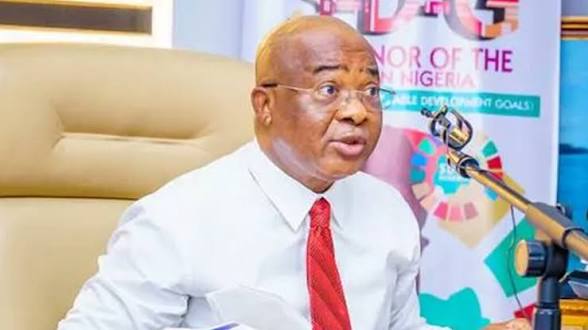
Imo Lawyers for the Defence of Democracy have called on the Minister of the Federal Capital Territory, Nyesom Wike, to stop what it termed public attacks on Imo State Governor, Senator Hope Uzodinma, saying political disagreements should be resolved through democratic dialogue and constitutional means.The group made the call in a statement signed by its Secretary, Ifeoma Chukwunyere on Friday, September 18, 2026, amid what it described as increasingly personal exchanges between Wike and Uzodinma over political developments within the All Progressives Congress.The lawyers said the APC Governors’ Forum had rejected what they described as Wike’s “Rainbow Coalition” political arrangement, arguing that the disagreement should be addressed with the forum rather than through personal attacks on Uzodinma.According to the group, the forum’s position was based on concerns that the political arrangement could weaken the APC or create divided loyalty within the party.“We recognise the constitutional right of every Nigerian, including public officials and political actors, to express political opinions, criticise policies and participate in political activities,” the group said.“However, that freedom must not become a licence for personal attacks, intimidation or unnecessary escalation.”The lawyers said Uzodinma, as the governor of Imo State, should be allowed to discharge his responsibilities without political exchanges creating tension capable of affecting the peace and stability of the state.They urged Wike to desist from further public comments concerning the governor, insisting that political disagreements should focus on policies, programmes, political positions and verifiable facts rather than personal exchanges.The group also warned political actors against turning Imo State into a battleground for political supremacy.“Imo State is not a battlefield for political supremacy. Its people have the constitutional right to choose their leaders and determine their political future without undue interference, intimidation or external pressure,” it said.The lawyers further called on political parties, leaders, supporters and media platforms to avoid inflammatory language that could provoke confrontation.They urged Uzodinma to continue to operate within the Constitution and the laws of the country, while allowing relevant political and legal institutions to handle legitimate disagreements.The group also appealed to President Bola Tinubu to encourage restraint among political actors, particularly in relation to the dispute between Wike and Uzodinma.Addressing Wike directly, the lawyers said: “Mr. Minister, Imo State belongs to its people. You are not from Imo, so stay off Imo.”They stressed that disagreements over political strategies, elections, alliances and political actors in the state should be settled through democratic debate and constitutional processes.The group said it would continue to monitor developments affecting constitutional governance, democratic participation, political freedom and peace in Imo State.“Our position is simple: Democracy must prevail. The Constitution must prevail. The rule of law must prevail,” the statement added.
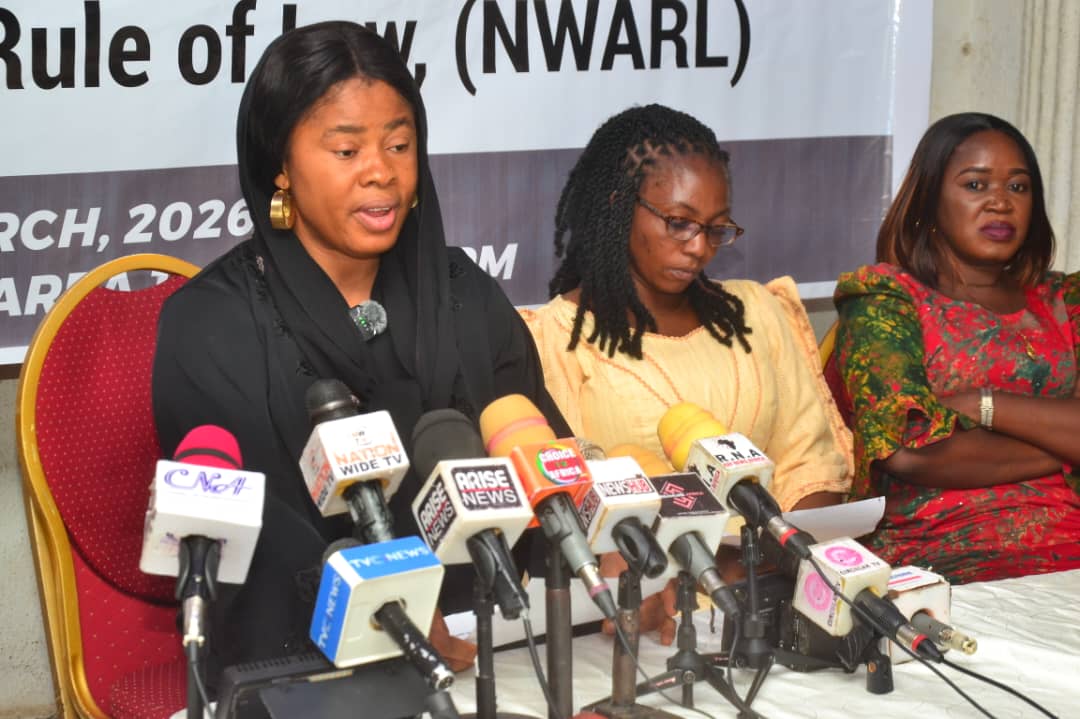
Four women-led advocacy groups have called for strict adherence to the rule of law in addressing the allegations circulating against the Minister of Works, David Nweze Umahi, insisting that the matter should be resolved through proper judicial channels rather than through social media campaigns.
At a press briefing in Abuja on Sunday, 1st March, 2026, the organisations, Women Advocates for Responsible Governance, WARG, Women for Justice and Institutional Integrity, WJII, Coalition of Patriotic Nigerian Women, CPNW, and National Women Alliance for Rule of Law, NWARL, collectively maintained that the accusations attributed to Mrs Tracy Nicholas Ohiri lack verifiable documentation and must be tested before a competent court.
Addressing journalists, the National President of WARG, Dr. Amina Yusuf, was reported to have expressed concern that unsubstantiated claims were being amplified in a manner capable of undermining governance. She reportedly stated that the issue was not about silencing any individual but about ensuring that serious allegations are backed by credible evidence. According to her, a ₦24.5 million transaction allegedly dating back to 2015 would ordinarily be supported by contracts, invoices, delivery acknowledgements, and traceable financial records.
She was quoted as questioning why, nearly a decade later, there appears to be no formal demand letter, civil action, or documented effort at recovery if the claim was genuine, stressing that public discourse must not replace legal procedure.
Similarly, the Executive Director of WJII, Hajia Halimat Bello, was said to have emphasized that institutional integrity depends on proof and process. She reportedly argued that commercial transactions of such magnitude cannot exist without documentation and challenged the claimant to present procurement records or evidence of civil recovery steps if the supply truly occurred.
The groups further cautioned against emotional narratives overshadowing legal standards, warning that sensational approaches risk eroding public trust in legitimate complaints.
Speaking for the CPNW, Mrs. Folake Adeyemi reportedly described the allegation as inconsistent with established commercial practice, noting that it would be unusual for a multi-million naira supply to remain undocumented and unlitigated for nearly ten years. She was said to have added that if the matter were purely about debt recovery, the appropriate legal remedies would have been pursued long ago.
On her part, Dr. Grace Onuoha, representing NWARL, reportedly drew attention to the broader democratic implications, stating that accountability must operate within the confines of lawful procedure. She was quoted as urging parties to file claims, present evidence, and allow the courts to determine the facts, warning against what she described as verdicts delivered in the court of public opinion.
Collectively, the four organisations reiterated that their stance was guided by principle rather than personality. They affirmed the presumption of innocence and underscored the need for due process in matters involving public officials.
They called on Nigerians to refrain from what they termed trial by ambush and to allow competent judicial institutions to examine the claims thoroughly.
The groups maintained that allegations, however serious, must ultimately be proven in court, not adjudicated through viral content.

Civil society organisations, media professionals, and leaders of the APC on Friday called for urgent constitutional intervention in the escalating political crisis in Rivers State, demanding that the National Assembly take over the legislative functions of the Rivers State House of Assembly in line with Section 11 of the Constitution.
Addressing journalists during a one week non stop rally at the APC Secretariat on 23rd January 2026, the groups declared that the Rivers State House of Assembly had lost credibility, legitimacy, and public trust due to what they described as persistent abuse of legislative powers and a reckless attempt to impeach Governor Siminalayi Fubara.
They warned that Rivers State was sliding into a dangerous constitutional crisis, stressing that the ongoing impeachment process was no longer about legislative oversight but a deliberate effort to destabilise democratic governance. According to them, democracy in the state was under serious threat and silence at this point would amount to complicity.
The groups commended the Rivers State Chief Judge for refusing to constitute a probe panel and for respecting existing court orders, describing the decision as a clear affirmation of the rule of law and a rejection of illegality. They insisted that no evidence of gross misconduct, as required by the Constitution, had been presented against Governor Fubara, adding that the allegations were unsubstantiated and politically motivated.
They further accused the Rivers State House of Assembly of procedural lawlessness, vendetta politics, and disregard for judicial authority, arguing that such conduct rendered the Assembly incapable of performing its constitutional duties. On this basis, they urged the National Assembly to invoke Section 11 subsection 4 of the Constitution of the Federal Republic of Nigeria and assume the legislative functions of the state assembly to restore order and democratic stability.
The APC Leaders Forum and civil society groups also alleged that 27 lawmakers loyal to former Governor Nyesom Wike, led by Martins Amaewhule, were behind the crisis. They claimed the lawmakers had received constituency project funds estimated at about ₦350 million each, luxury SUV vehicles, and up to one year salary in advance, yet remained unsatisfied and determined to frustrate the current administration. According to the groups, the lawmakers were more interested in diverting state resources for personal benefit than allowing public funds to serve the people of Rivers State.
The coalition vowed to sustain the protests until decisive constitutional action was taken, including the takeover of legislative functions by the National Assembly. They called on Nigerians of goodwill to peacefully mobilise, maintain civic presence around the National Assembly, and resist what they described as legislative anarchy.
They maintained that Governor Fubara had shown prudence and commitment to the welfare of Rivers people, warning that Rivers State must not be sacrificed on the altar of political desperation.
The groups concluded with a call for unity in defence of democracy, declaring their resolve to continue the struggle until constitutional order is fully restored in Rivers State.


2027: Ignore Wike’s Ranting, Lawyers tell Uzodinma