News
Energy governance group faults ADC, says Tinubu’s approval of NNPC legacy balance reconciliation restores fiscal transparency, not revenue loss


The Centre for Energy Governance and Public Finance Accountability (CEGPFA) has dismissed claims by the African Democratic Congress (ADC) that President Bola Ahmed Tinubu’s approval of the reconciliation and removal of certain Nigerian National Petroleum Company Limited (NNPC Ltd) legacy balances from the Federation Account was unconstitutional or financially harmful to states and local governments.
Speaking on Friday at a press conference held at the Transcorp Hilton, Abuja, the centre said the allegations ignored the historical, legal and fiscal realities surrounding the disputed balances, describing them as “unfounded” and “misleading”.
Dr Julius Osagie Eromonsele, executive director of the centre, said the balances in question were not fresh revenues generated under the current administration but long-standing legacy entries accumulated over several decades, many of which predated the Petroleum Industry Act (PIA).
“It is crucial to note that the balances in question are not recent revenues generated under the current administration. They are long-standing legacy entries accumulated over decades, many of them arising before the enactment of the Petroleum Industry Act,” Eromonsele said.
He explained that the disputed figures stemmed from unresolved production sharing contract disputes, domestic crude supply obligations under the former fuel subsidy regime, royalty assessment disagreements and reconciliation gaps between NNPC, regulators and revenue agencies.
According to him, these balances had remained on the Federation Account books for years despite repeated audits that questioned their accuracy, legal enforceability and collectability, creating a distorted picture of public finances across all tiers of government.
Countering claims that the balances were arbitrarily written off by presidential fiat, Eromonsele said the approval followed a formal reconciliation process involving relevant fiscal and regulatory institutions, with presentations made to the Federation Account Allocation Committee (FAAC).
“Official records show that approximately $1.42 billion and N5.57 trillion were removed from the Federation Account books after reconciliation established that these figures were either duplicated, overstated, unsupported by verifiable documentation, or no longer legally recoverable,” he said.
He stressed that the directive applied strictly to legacy balances accumulated up to December 31, 2024, adding that reconciliation should not be confused with the cancellation of valid revenue.
“Reconciliation is a recognised public finance practice. It is not the same as cancelling valid revenues. Rather, it is the process of aligning records to reflect economic and legal reality,” Eromonsele said.
He also clarified that no cash was removed from the Federation Account and that no allocations to states or local governments were reversed.
“The funds in question were not sitting as cash in the Federation Account. What occurred was the correction of inherited accounting distortions that had long outlived their practical relevance,” he added.
Addressing constitutional concerns raised by the ADC, the centre said Section 162 of the Constitution applies only to revenues that are lawfully due and payable, not to disputed or extinguished claims.
“Public finance administration requires constant reconciliation to ensure that only valid, auditable and legally enforceable revenues are presented for distribution,” Eromonsele said.
He argued that sustaining false receivables undermines budgeting, fiscal discipline and revenue predictability for subnational governments, noting that credible and realistic revenue flows are more beneficial than inflated figures that never materialise.
The centre said the reconciliation aligns with reforms introduced by the PIA, which repositioned NNPC Ltd as a commercial entity operating under international accounting standards.
Concluding, the centre commended President Tinubu for approving what it described as a difficult but necessary decision.
“Writing off long-standing, unverifiable legacy balances required political will and a commitment to fiscal honesty over convenience. It sends a clear signal that Nigeria is prepared to confront the structural weaknesses of its energy revenue system rather than perpetuate them,” Eromonsele said.
He urged politicians and stakeholders to approach the issue responsibly and support reforms that strengthen transparency and accountability in Nigeria’s public finance system.
Full speech attached
BEING FULL TEXT AT A PRESS CONFERENCE ORGANISED BY THE CENTRE FOR ENERGY GOVERNANCE AND PUBLIC FINANCE ACCOUNTABILITY ON THE RECONCILIATION OF NNPC LTD LEGACY BALANCES AND THE FEDERATION ACCOUNT HELD AT TRANSCORP HILTON, ABUJA, ON FRIDAY, JANUARY 10, 2025
Ladies and gentlemen of the press, distinguished stakeholders, and fellow Nigerians, the Centre for Energy Governance and Public Finance Accountability has convened this important press conference to respond to unfounded claims by the African Democratic Congress (ADC) concerning President Bola Ahmed Tinubu’s approval of the reconciliation and removal of certain legacy balances attributed to the Nigerian National Petroleum Company Limited (NNPC Ltd) from the Federation Account.
The debate has been framed as a constitutional crisis and a deliberate deprivation of revenue due to states and local governments. Given the gravity of such allegations, it is important to ground this conversation in facts, law, and the historical context of Nigeria’s petroleum revenue administration.
BACKGROUND
It is crucial to note that the balances in question are not recent revenues generated under the current administration. They are long-standing legacy entries accumulated over decades, many of them arising before the enactment of the Petroleum Industry Act (PIA). These entries stem from unresolved production sharing contract disputes, domestic crude supply obligations under the fuel subsidy regime, royalty assessment disagreements, and persistent reconciliation gaps between NNPC, regulators, and revenue agencies.
For years, these balances remained on the Federation Account books despite repeated audits and reviews that questioned their accuracy, legal enforceability, and collectability. Treating such disputed figures as assured income created a distorted picture of public finances and fostered unrealistic revenue expectations across all tiers of government.
WHAT THE PRESIDENTIAL APPROVAL ACTUALLY MEANS
Contrary to claims of an arbitrary executive write-off, the President’s approval followed a formal reconciliation process involving relevant fiscal and regulatory institutions, including presentations made to the Federation Account Allocation Committee (FAAC).
Official records show that approximately $1.42 billion and N5.57 trillion were removed from the Federation Account books after reconciliation established that these figures were either duplicated, overstated, unsupported by verifiable documentation, or no longer legally recoverable. The directive applied strictly to legacy balances accumulated up to December 31, 2024.
Reconciliation is a recognised public finance practice. It is not the same as cancelling valid revenues. Rather, it is the process of aligning records to reflect economic and legal reality. Revenues that are not collectible cannot be distributed, and carrying them indefinitely on public accounts does not create wealth—it merely postpones fiscal clarity.
It is also critical to note that the funds in question were not sitting as cash in the Federation Account. No existing allocations to states or local governments were reversed or withdrawn. What occurred was the correction of inherited accounting distortions that had long outlived their practical relevance.
CONSTITUTIONAL AND FISCAL IMPLICATIONS
The ADC has cited Section 162 of the Constitution to argue that the President lacks authority to approve the removal of these balances. However, Section 162 applies to revenues that are lawfully due and payable to the Federation. It does not compel the perpetuation of disputed or legally extinguished claims as revenue.
Public finance administration requires constant reconciliation to ensure that only valid, auditable, and legally enforceable revenues are presented for distribution. Without this, the Federation Account would become a repository for accounting fiction rather than a transparent reflection of national income.
Furthermore, the Federation Account is administered collectively through FAAC, which includes representatives of the federal, state, and local governments. The reconciliation process was not unilateral, secretive, or detached from institutional oversight.
From a fiscal standpoint, sustaining false receivables undermines planning, budgeting, and fiscal discipline. States and local governments are better served by predictable, credible revenue flows than by inflated figures that repeatedly fail verification and never materialise in cash form.
This reconciliation also aligns with the reforms introduced by the Petroleum Industry Act, which repositioned NNPC Ltd as a commercial entity subject to international accounting standards. Legacy balances accumulated under a fundamentally different governance structure cannot be allowed to distort the post-PIA fiscal framework indefinitely.
CONCLUSION
In conclusion, the Centre for Energy Governance and Public Finance Accountability affirms that the reconciliation and removal of NNPC Ltd’s legacy balances from the Federation Account does not constitute a constitutional violation, nor does it deprive states and local governments of legitimate revenue.
Rather, it represents a necessary and responsible step toward restoring transparency, credibility, and realism to Nigeria’s public finance system—particularly in the oil and gas sector, which has long suffered from opaque accounting and inherited distortions.
The Centre acknowledges and commends President Bola Ahmed Tinubu for approving this difficult but necessary decision. Writing off long-standing, unverifiable legacy balances required political will and a commitment to fiscal honesty over convenience. It sends a clear signal that Nigeria is prepared to confront the structural weaknesses of its energy revenue system rather than perpetuate them.
True fiscal federalism cannot be built on numbers that exist only on paper. It must rest on transparent accounts, enforceable obligations, and a shared commitment to accuracy and accountability.
We urge all politicians and stakeholders to approach this issue with responsibility and restraint, and to support reforms that strengthen, not weaken, the integrity of Nigeria’s public finances.
Thank you.
[Questions]
Signed:
Dr Julius Osagie Eromonsele
Executive Director,
Centre for Energy Governance and Public Finance Accountability
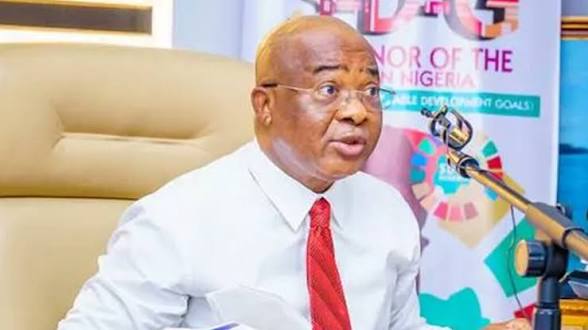
Imo Lawyers for the Defence of Democracy have called on the Minister of the Federal Capital Territory, Nyesom Wike, to stop what it termed public attacks on Imo State Governor, Senator Hope Uzodinma, saying political disagreements should be resolved through democratic dialogue and constitutional means.The group made the call in a statement signed by its Secretary, Ifeoma Chukwunyere on Friday, September 18, 2026, amid what it described as increasingly personal exchanges between Wike and Uzodinma over political developments within the All Progressives Congress.The lawyers said the APC Governors’ Forum had rejected what they described as Wike’s “Rainbow Coalition” political arrangement, arguing that the disagreement should be addressed with the forum rather than through personal attacks on Uzodinma.According to the group, the forum’s position was based on concerns that the political arrangement could weaken the APC or create divided loyalty within the party.“We recognise the constitutional right of every Nigerian, including public officials and political actors, to express political opinions, criticise policies and participate in political activities,” the group said.“However, that freedom must not become a licence for personal attacks, intimidation or unnecessary escalation.”The lawyers said Uzodinma, as the governor of Imo State, should be allowed to discharge his responsibilities without political exchanges creating tension capable of affecting the peace and stability of the state.They urged Wike to desist from further public comments concerning the governor, insisting that political disagreements should focus on policies, programmes, political positions and verifiable facts rather than personal exchanges.The group also warned political actors against turning Imo State into a battleground for political supremacy.“Imo State is not a battlefield for political supremacy. Its people have the constitutional right to choose their leaders and determine their political future without undue interference, intimidation or external pressure,” it said.The lawyers further called on political parties, leaders, supporters and media platforms to avoid inflammatory language that could provoke confrontation.They urged Uzodinma to continue to operate within the Constitution and the laws of the country, while allowing relevant political and legal institutions to handle legitimate disagreements.The group also appealed to President Bola Tinubu to encourage restraint among political actors, particularly in relation to the dispute between Wike and Uzodinma.Addressing Wike directly, the lawyers said: “Mr. Minister, Imo State belongs to its people. You are not from Imo, so stay off Imo.”They stressed that disagreements over political strategies, elections, alliances and political actors in the state should be settled through democratic debate and constitutional processes.The group said it would continue to monitor developments affecting constitutional governance, democratic participation, political freedom and peace in Imo State.“Our position is simple: Democracy must prevail. The Constitution must prevail. The rule of law must prevail,” the statement added.
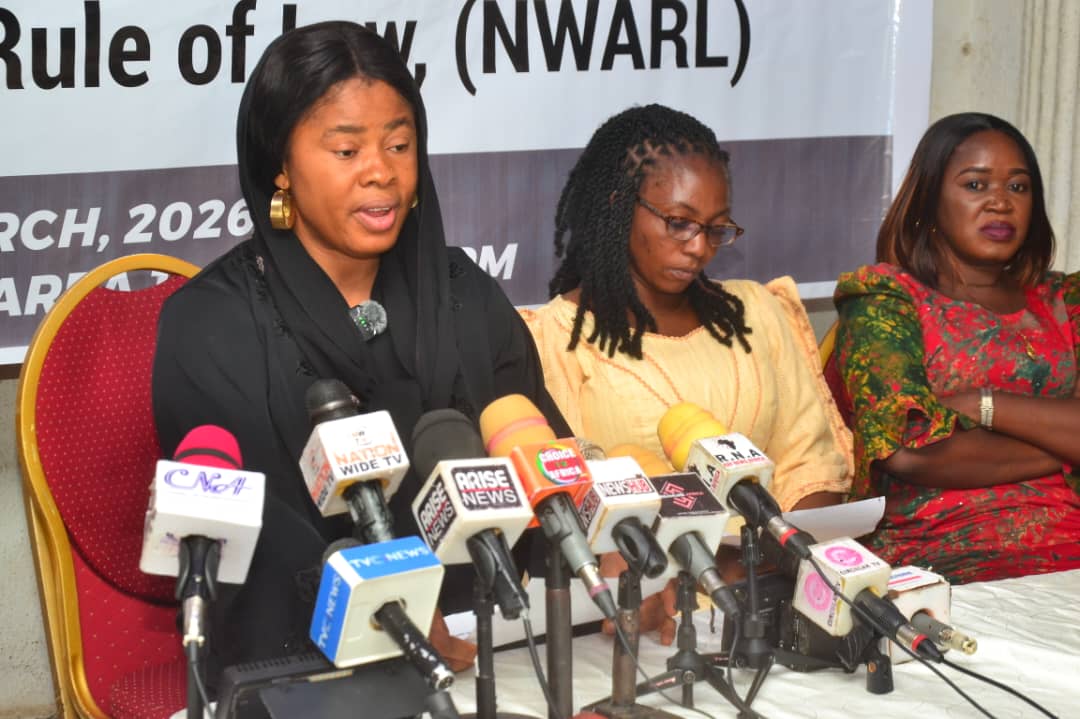
Four women-led advocacy groups have called for strict adherence to the rule of law in addressing the allegations circulating against the Minister of Works, David Nweze Umahi, insisting that the matter should be resolved through proper judicial channels rather than through social media campaigns.
At a press briefing in Abuja on Sunday, 1st March, 2026, the organisations, Women Advocates for Responsible Governance, WARG, Women for Justice and Institutional Integrity, WJII, Coalition of Patriotic Nigerian Women, CPNW, and National Women Alliance for Rule of Law, NWARL, collectively maintained that the accusations attributed to Mrs Tracy Nicholas Ohiri lack verifiable documentation and must be tested before a competent court.
Addressing journalists, the National President of WARG, Dr. Amina Yusuf, was reported to have expressed concern that unsubstantiated claims were being amplified in a manner capable of undermining governance. She reportedly stated that the issue was not about silencing any individual but about ensuring that serious allegations are backed by credible evidence. According to her, a ₦24.5 million transaction allegedly dating back to 2015 would ordinarily be supported by contracts, invoices, delivery acknowledgements, and traceable financial records.
She was quoted as questioning why, nearly a decade later, there appears to be no formal demand letter, civil action, or documented effort at recovery if the claim was genuine, stressing that public discourse must not replace legal procedure.
Similarly, the Executive Director of WJII, Hajia Halimat Bello, was said to have emphasized that institutional integrity depends on proof and process. She reportedly argued that commercial transactions of such magnitude cannot exist without documentation and challenged the claimant to present procurement records or evidence of civil recovery steps if the supply truly occurred.
The groups further cautioned against emotional narratives overshadowing legal standards, warning that sensational approaches risk eroding public trust in legitimate complaints.
Speaking for the CPNW, Mrs. Folake Adeyemi reportedly described the allegation as inconsistent with established commercial practice, noting that it would be unusual for a multi-million naira supply to remain undocumented and unlitigated for nearly ten years. She was said to have added that if the matter were purely about debt recovery, the appropriate legal remedies would have been pursued long ago.
On her part, Dr. Grace Onuoha, representing NWARL, reportedly drew attention to the broader democratic implications, stating that accountability must operate within the confines of lawful procedure. She was quoted as urging parties to file claims, present evidence, and allow the courts to determine the facts, warning against what she described as verdicts delivered in the court of public opinion.
Collectively, the four organisations reiterated that their stance was guided by principle rather than personality. They affirmed the presumption of innocence and underscored the need for due process in matters involving public officials.
They called on Nigerians to refrain from what they termed trial by ambush and to allow competent judicial institutions to examine the claims thoroughly.
The groups maintained that allegations, however serious, must ultimately be proven in court, not adjudicated through viral content.

Civil society organisations, media professionals, and leaders of the APC on Friday called for urgent constitutional intervention in the escalating political crisis in Rivers State, demanding that the National Assembly take over the legislative functions of the Rivers State House of Assembly in line with Section 11 of the Constitution.
Addressing journalists during a one week non stop rally at the APC Secretariat on 23rd January 2026, the groups declared that the Rivers State House of Assembly had lost credibility, legitimacy, and public trust due to what they described as persistent abuse of legislative powers and a reckless attempt to impeach Governor Siminalayi Fubara.
They warned that Rivers State was sliding into a dangerous constitutional crisis, stressing that the ongoing impeachment process was no longer about legislative oversight but a deliberate effort to destabilise democratic governance. According to them, democracy in the state was under serious threat and silence at this point would amount to complicity.
The groups commended the Rivers State Chief Judge for refusing to constitute a probe panel and for respecting existing court orders, describing the decision as a clear affirmation of the rule of law and a rejection of illegality. They insisted that no evidence of gross misconduct, as required by the Constitution, had been presented against Governor Fubara, adding that the allegations were unsubstantiated and politically motivated.
They further accused the Rivers State House of Assembly of procedural lawlessness, vendetta politics, and disregard for judicial authority, arguing that such conduct rendered the Assembly incapable of performing its constitutional duties. On this basis, they urged the National Assembly to invoke Section 11 subsection 4 of the Constitution of the Federal Republic of Nigeria and assume the legislative functions of the state assembly to restore order and democratic stability.
The APC Leaders Forum and civil society groups also alleged that 27 lawmakers loyal to former Governor Nyesom Wike, led by Martins Amaewhule, were behind the crisis. They claimed the lawmakers had received constituency project funds estimated at about ₦350 million each, luxury SUV vehicles, and up to one year salary in advance, yet remained unsatisfied and determined to frustrate the current administration. According to the groups, the lawmakers were more interested in diverting state resources for personal benefit than allowing public funds to serve the people of Rivers State.
The coalition vowed to sustain the protests until decisive constitutional action was taken, including the takeover of legislative functions by the National Assembly. They called on Nigerians of goodwill to peacefully mobilise, maintain civic presence around the National Assembly, and resist what they described as legislative anarchy.
They maintained that Governor Fubara had shown prudence and commitment to the welfare of Rivers people, warning that Rivers State must not be sacrificed on the altar of political desperation.
The groups concluded with a call for unity in defence of democracy, declaring their resolve to continue the struggle until constitutional order is fully restored in Rivers State.


2027: Ignore Wike’s Ranting, Lawyers tell Uzodinma