
Uncategorized
Children with special needs in England are 20 months behind their peers by age five, report reveals

A new report has revealed that five-year-old children with special educational needs in England are now 20 months behind their peers, raising concern over a widening gap in the country’s education system.
The Education Policy Institute’s (EPI) annual report, published on Tuesday, warns that, five years after the pandemic, the attainment gap for these children continues to widen, with little sign of recovery.
The disruption caused by Covid, including school closures and reduced attendance, has left disadvantaged pupils and those with special educational needs struggling to catch up.
Though the disadvantage gap at primary and secondary schools narrowed marginally between 2023 and 2024, it says disadvantaged pupils remain significantly behind their peers, with the gap up to a month wider than before the pandemic.
The gap has grown yet wider among children in reception class right at the start of their education, with pupils with special educational needs and disabilities (Send) the most severely affected, the EPI analysis shows.
In 2024, five-year-olds with education, health and care plans (EHCPs) – legally binding documents that outline the additional support required – were 20.1 months behind their peers, the widest gap on record since EPI analysis began more than a decade earlier.
Five-year-olds from lower-income families than their peers are also falling further behind, prompting warnings that the impact of the pandemic has had “long-lasting effects on infants’ development”.
Natalie Perera, EPI’s chief executive, said the report showed that five years on from the pandemic the education system had yet to recover.
“Our youngest and most vulnerable learners are still paying the price. This should be a significant concern for policymakers,” she said. “Without swift action, we are baking lifelong disadvantage into the system. Higher levels of funding for disadvantage, addressing student absence, and fixing the Send system, which is at crisis point, are urgent priorities.”
The EPI report compares pupil attainment in 2024 with the previous year and with 2019, the year immediately before the Covid-19 pandemic, based on economic disadvantage, Send, gender, ethnicity, English as an additional language (EAL) and geography.
It finds that fewer disadvantaged young people are participating in education post-16 than at any point since 2019, resulting in more than one in five disadvantaged 16-year-olds out of education or training.
At key stage 4, which culminates in GCSEs and in education for 16-19-year-olds, the attainment of white British pupils has declined since 2019 relative to all other ethnic groups and girls have “made consistently less progress than boys across secondary school once their attainment at age 11 is taken into account”.
John Barneby, the chief executive of Oasis Community Learning multi-academy trust, said: “The growing inequalities facing our youngest and most vulnerable children –particularly those with Send – are deeply concerning and risk entrenching disadvantage for a lifetime.
“Addressing these challenges requires bold investment and a shared commitment across society to give every child the opportunity to flourish and find their place in the world.”
Pepe Di’Iasio, the general secretary of the Association of School and College Leaders, said: “From a government whose mission is that background should not be a determining factor in success, we need to see more purpose and positive action.
“The gap identified between five-year-olds with special educational needs and disabilities and their peers is particularly alarming, and emphasises how important it is for the government to get right its planned reform of a system that is under unsustainable pressure and is not working well for anyone.”
A Department for Education spokesperson said: “This report lays bare the widening disadvantage gap this government inherited, and which we are working flat out to solve through the plan for change.
“From next year we will be investing £9bn per year in a revitalised early-education system that helps get children ready for school, with working parents receiving 30 funded childcare hours a week, an almost 50% increase in early years disadvantage funding, and a strong new focus on improving the quality of reception-year education.”
The Guardian



Uncategorized
NUPRC’s Digital Compliance Systems, Licensing Reforms Positioning Nigeria for Stronger Energy Investment, says BusinessMetrics

BusinessMetrics, an independent industry performance evaluator, says the Nigerian Upstream Petroleum Regulatory Commission (NUPRC) is delivering sustained progress in the implementation of the Petroleum Industry Act (PIA), with reforms that are strengthening investor confidence, deepening transparency and repositioning the upstream industry for long-term growth.
In a statement released on Monday, BusinessMetrics said its latest sector review shows that NUPRC’s regulatory measures over the last year “reflect a deliberate shift toward predictable, technology-driven and investment-friendly governance,” noting that these improvements are already reshaping Nigeria’s competitiveness in the global energy market.
According to the statement, one of the Commission’s most significant achievements is the rapid digitisation of oversight systems that monitor production, metering accuracy, fiscal obligations and environmental performance.
BusinessMetrics said these digital tools have “reduced reporting delays, improved data integrity and enhanced the global credibility of Nigeria’s upstream statistics”.
“The availability of reliable, real-time data is one of the strongest indicators of a trustworthy investment climate,” the organisation said.
“NUPRC’s digital reforms are raising confidence among operators and international financiers who rely on transparent information before committing capital to new field developments.”
The evaluator also noted improvements in licensing and regulatory approval processes, describing the Commission’s approach as more structured, rules-based and commercially coherent compared to previous years.
“Clearer timelines for approvals, structured consultations with operators and the alignment of regulatory decisions with PIA provisions have created a more efficient operating environment,” the firm said.
“This is enabling quicker movement on projects, reducing administrative bottlenecks and giving investors greater clarity on regulatory expectations.”
The organisation said fiscal clarity under the PIA, implemented through NUPRC, has equally enhanced the attractiveness of Nigeria’s upstream assets, leading to renewed activity around marginal fields, reactivation of dormant licences and fresh commitments from both indigenous and international operators.
“The fiscal certainty introduced by the PIA continues to incentivise capital deployment. We are seeing a gradual resurgence in upstream investment appetite, driven by the clarity and predictability that investors have long demanded,” the statement added.
On gas development and decarbonisation, BusinessMetrics commended NUPRC’s enforcement of domestic gas delivery obligations and its frameworks for flare-gas commercialisation, saying these efforts are opening new growth corridors for Nigeria’s energy transition.
“The Commission’s work in gas monetisation is particularly impactful. It supports industrial expansion, contributes to power stability and positions gas as a central pillar of Nigeria’s economic transformation,” the statement added.
The evaluator further highlighted progress in customer-facing reforms, including the strengthening of the One-Stop Regulatory Centre, which it described as a crucial tool for reducing red tape and improving the ease of doing business in the upstream sector.
“This approach aligns with global best practices and signals institutional willingness to reduce friction for investors,” BusinessMetrics noted.
While acknowledging the complexity of Nigeria’s upstream environment, the organisation said the Commission’s consistent delivery on its mandate is helping restore confidence in the sector.
“With sustained implementation of the PIA, Nigeria is better positioned to compete for global capital, increase production capacity and advance long-term energy security,” the organisation said.
BusinessMetrics concluded that NUPRC’s progress “sets a solid foundation for deeper reforms” and urged continued institutional discipline, innovation and investor-focused regulation to fully unlock Nigeria’s upstream potential.
Uncategorized
Forgive your blackmailers and focus on helping Mr. President deliver on his security agenda, group tells Minister Matawalle
The Ambassadors for Peace and Progress (APP) has appealed to the Minister of State for Defence, Dr. Bello Mohammed Matawalle, to forgive the five individuals who publicly confessed to running a N500 million smear campaign against him while he was governor of Zamfara State.
Addressing journalists at a press conference in Abuja on Sunday, the National Coordinator of the group, Rev. Matthew Adejoh, urged the minister not to allow the painful betrayal to distract him from the critical national assignment entrusted to him by President Bola Ahmed Tinubu.
“We followed with deep emotion the courageous confession made by Comrade Aryan Abdul Kareem and his colleagues. Their admission has exposed the depth of political desperation in Zamfara State, but it has also opened a rare door for healing and reconciliation,” Rev. Adejoh said.
Describing Dr. Matawalle as “a peaceful, kind and large-hearted leader who is a friend to everyone,” the cleric appealed to him to extend the same hand of fellowship he has always shown to people of all faiths.
“Dr. Bello Matawalle is known across the North as a man who builds bridges, not walls,” he said. Quoting Colossians 3:13, he added: “Bear with each other and forgive one another if any of you has a grievance against someone. Forgive as the Lord forgave you.
“These young men have fallen on their knees in public and begged for mercy. As believers and as patriots, we plead with His Excellency to forgive them and everyone who was paid to destroy his name.
The bandits ravaging our region do not read sponsored articles — they only respect superior resolve and unity of purpose.”
The Ambassadors praised President Tinubu for appointing Matawalle, saying the elevation was divine recompense for years of wicked blackmail.
“Your enemies spent over half a billion naira to pull you down, yet Allah raised you to the very centre of Nigeria’s war against terror. Let this confession be the final burial of that evil plot,” Rev. Adejoh declared.
While calling on the EFCC, ICPC and security agencies to immediately investigate the allegation that Zamfara State funds were used to sponsor media attacks, the group insisted that Dr. Matawalle himself should choose the path of forgiveness.
“Let justice run its full course, but let our dear Minister show the maturity, kindness and large-heartedness that made President Tinubu bring him to Abuja. Forgive them, Your Excellency. Focus all your energy on helping Mr. President end insecurity forever. That is the greatest victory.”
Uncategorized
Accountability Centre Lauds NNPC’s N5.4trn Profit, Says Ojulari Has Set New Benchmark for Public Sector Performance
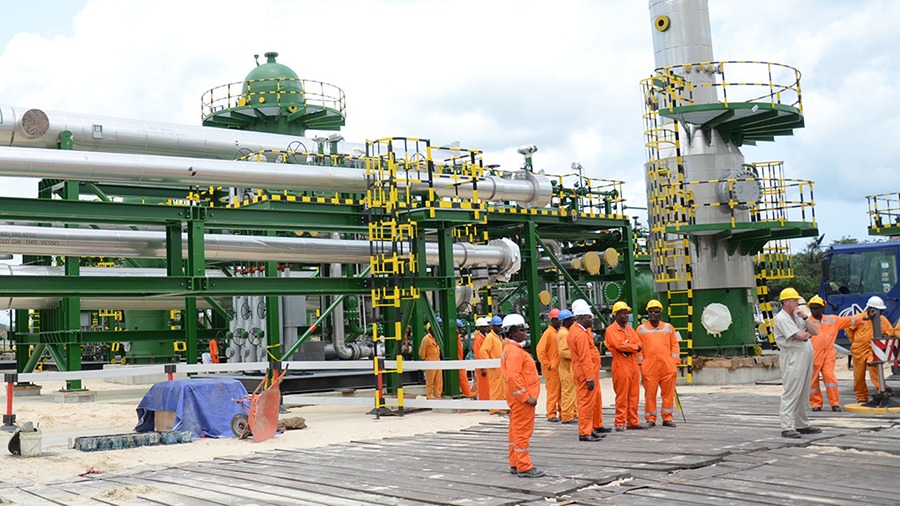
A policy advocacy group, the Centre for Energy Accountability and Reform (CEAR), has commended the Nigerian National Petroleum Company (NNPC) Limited for declaring a Profit After Tax of N5.4 trillion for the 2024 financial year.
The Centre described the performance as “an unmistakable affirmation that Nigeria’s oil industry is finally responding to disciplined management and modern commercial reforms”.
In a statement issued on Friday in Abuja and signed by CEAR’s Executive Director, Dr. Ibrahim Ahmed, the centre said the latest results released by GCEO Bayo Ojulari represent the strongest demonstration yet that the company’s drive toward operational efficiency, transparency and investment expansion is yielding measurable outcomes.
NNPC recently announced the 2024 Profit After Tax during a briefing in Abuja, confirming a 64 percent year-on-year jump from the N3.297 trillion recorded in 2023. Revenue also rose sharply to N45.1 trillion, reflecting an 88 percent surge, supported by higher production volumes and strengthened downstream reforms.
CEAR said the results validate the company’s transformation since it became a limited liability company, crediting Ojulari’s leadership for stabilising operations, tightening cost structures and restoring investor confidence at a time when global capital is increasingly sensitive to governance standards.
“This profit performance is not accidental. It reflects a deliberate, disciplined shift in how NNPC Limited is run—one that prioritises efficiency, transparency and commercial viability. Under Bayo Ojulari’s watch, the company has shown that a national oil company can be profitable, globally competitive and strategically aligned with national development goals,” the statement reads.
The Centre said the ongoing reforms across the upstream, midstream and downstream sectors are beginning to correct years of inefficiency, vandalism, under-investment and regulatory conflict.
Ahmed noted that the financial results align with the Renewed Hope Agenda of President Bola Tinubu, particularly the push for fiscal sustainability and improved sectoral governance.
While acknowledging the decline in foreign exchange earnings reported in the 2024 statement, the Centre said the shortfall underscores the need for sustained reforms to boost production, expand gas output and deepen value-addition rather than crude export dependency.
“The path to long-term stability must be investment-led and production-driven. NNPC Limited’s plan to raise crude output to two million barrels per day by 2027 and three million barrels per day by 2030 is the type of ambition the sector requires. Likewise, the move to scale gas production to 12 billion standard cubic feet per day by 2030 shows strategic foresight,” the statement added.
CEAR also praised the company’s plan to mobilise $60 billion in new investments across the value chain, saying such an expansion will be critical for job creation, revenue growth and anchoring Nigeria’s energy transition.
“With this performance, NNPC Limited has sent a clear message that Nigeria’s energy sector can work, and work profitably, when guided by clear vision and competent management,” Ahmed said.
The Centre urged regulators, industry players and political actors to avoid distractions and continue supporting the reforms that are restoring credibility to Nigeria’s petroleum value chain.

NUPRC’s Digital Compliance Systems, Licensing Reforms Positioning Nigeria for Stronger Energy Investment, says BusinessMetrics
Forgive your blackmailers and focus on helping Mr. President deliver on his security agenda, group tells Minister Matawalle

Activists confess receiving N500m Naira to blackmail Tinubu’s Minister Matawalle, beg for forgiveness

-

 News3 months ago
CSOs fault DAPPMAN’s ₦75 per litre coastal freight cost demand
-

 Uncategorized1 month ago
Paracetamol Use in Pregnancy Doesn’t Cause Autism, New Study Confirms
-
Uncategorized3 months ago
Consumer Forum Urges FG, DSS to Investigate Desperate Efforts by PENGASSAN to Shut Down Dangote Refinery
-

 News3 weeks ago
Breaking: FBNQUEST: Nestoil and Neconde are not under any receivership
-

 News3 months ago
CSOs To Tinubu: Hold DAPPMAN, Labour Unions Responsible For Breakdown Of Law, Order
-

 News1 month ago
Coalition Backtracks, Apologises To FIRS Chairman Adedeji Over False Allegations
-
News1 month ago
NGO Empowers 150 Girls with Disabilities in FCT to Promote Inclusive Education
-

 Uncategorized2 months ago
Sowore and Divisive Anti-Democratic Forces Must Be Stopped; Enough is Enough-ACN