News
Oyo State Advances Inclusive Education for Children with Special Needs

By NAN
Rofiah Oyekunle is a 13-year-old special girl with a deep-seated desire to become a teacher in the future.
Her physically challenged status notwithstanding, Rofiah shows no sign of submitting this precious dream to her disability.
Perhaps, being a pupil of Basic Special School, Adeoyo, Ring Road, Ibadan, is just the fuel she needs to keep believing in herself.
Of course, she reckons herself fortunate, knowing that her colleagues, unprivileged to attend special schools, have to stay back at home to watch their dream turn to a nightmare.
With this in mind, Rofiah’s determination to sail through the storms of disability became so endearing, as testified by Mrs Ganiyat Alabi, the headmistress of her school.
“That girl, if she writes or speaks for you, you will like it and adore her.
“Though she’s on a wheelchair with crippled hands, yet she writes, and she is intelligent,” said the proud headmistress.
Alabi, desiring more pupils in Rofiah’s standard, especially in Oyo State, said removing certain learning limitations would further aid the educational inclusiveness of Persons with Disabilities (PWDs).
She mentioned the long-distance pupils with disabilities had to travel to reach school, necessitating the need to reduce school days to two or three days per week.
“There are some pupils with disabilities who need to be stable and be around the school so that educating them will be easier than coming from home.
“So, distance is one of the challenges as well.
“There are some parents who have these children at home, but the stigmatisation and distance of taking them to school are barriers.
“It’s tough, especially when they look at the transportation fare, as they may have to spend between N3,000 and N4,000 daily.
“So, if you see some pupils once or twice per week, you should thank God that they could make it,” the headmistress said.
Alabi also identified the lack of personnel for different categories of disabilities present in special schools as another challenge facing inclusive learning.
The headmistress stated that there should be different classes for different disabilities to aid learning.
“Putting all of them together in the same classroom will jeopardise their learning because they are not all the same in terms of their disabilities and their degrees.
“For instance, those with autism see the world differently, but once we identify them and discover what interests them, we make that our focus.
“And sometimes, because some may be violent and disturb others, we ought not to put all of them together,” Alabi said.
While commending the state government for recently recruiting four special-needs teachers and non-teaching staff to the school, she asked for more intervention.
According to her, the lack of enough classrooms, teaching aids, boarding facilities, and teaching and non-teaching personnel constitutes a huge setback to inclusive learning.
“Sure, despite the new additional hands, we still need more teaching and non-teaching staff, and we need a hostel to be erected in the school compound.
“We have the space for that, and presently, we operate a temporary boarding facility which started in March but can only accommodate 20 out of the about 67 pupils we have,” Alabi said.
The News Agency of Nigeria (NAN) recalls that the nation’s Universal Basic Education (UBE) policy aims to make education accessible to all children, regardless of location or socio-economic background.
One of UBE’s objectives is to reduce the distance between schools and communities, making it easier for children to access education.
Findings, however, revealed that only 15 out of 33 Local Government Areas (LGAs) in the state have schools for pupils with special needs.
Ibadan has nine such schools, comprising both public and private schools.
The situation is heightened by the lack of a policy framework, such as the gender-responsive Education Sector Plan (ESP) in Oyo State.
This is a means to ensure every child, irrespective of gender, accesses good and quality education without any form of barrier.
So, having an ESP in the state has become imperative for the inclusion of children with special needs who are currently out of school.
A parent of a pupil with special needs, Mrs Anna Ogundipe, said she didn’t mind the stress of taking her child to a government-owned special needs school, despite the long distance.
“We live at Yemetu in Ibadan, and because of schooling, my daughter, with a hearing impairment, has to change from the regular school to a special school for the deaf at Eleyele.
“At first, I thought if she was amid those who could speak, it would help her to hear and speak, but when her condition was worsening, I didn’t mind the distance.
“I enrolled her at the Ibadan School for the Deaf, and her condition greatly improved over a short period.
“I believe it will still be better,” Ogundipe said optimistically.
Also, Mrs Oladunni Adepoju, Headmistress, Sabol International School for the Physically Challenged, reiterated the need for massive government support.
According to her, many of the children are locked away in their homes because of the negative attitude of parents and society.
“If we do not care and make provisions for them to show they are part of society, then we’ll have many more of them becoming useless and unable to contribute to the country’s development, despite their disabilities,” she said.
Attesting to the various government interventions at the federal and state levels in the school, Adepoju called for special funds for the education, feeding, and basic healthcare of special needs children.
Meanwhile, Mr Femi Ajulo, Chairman, Joint Association of Persons with Disabilities (JONAPWD), said the Oyo State Government had ensured the inclusion of PWDs in many of its programmes.
“Regrettably, while the government had included people with disabilities in its free education policy, many are still left at home with no access to education because of shame or stigmatisation,” he said.
According to Ajulo, there are about five to six schools for various categories of PWDs in the state.
“This has made it easy for them to get educated.
“The government has also provided a vocational centre for PWDs with a boarding facility, but it cannot accommodate everyone,” he said.
Ajulo believes the state ESP ensures inclusion and support for PWDs.
According to him, the government has promised to pay 10 per cent of the cost of schooling for PWDs attending private schools.
“Those who want their wards educated may not mind putting them in boarding facilities to reduce the distance challenge,” he said, acknowledging distance as a critical barrier to accessing education in the state.
Meanwhile, the Oyo State Commissioner for Education, Prof. Salihu Adelabu, said the government has a very elaborate framework for the different categories of PWDs.
“We are thinking of inclusive education, and a lot of things are in place too; any time soon, it will be seen.
“What we are doing right now is to try and map where they are, how many of them are in schools, and how many are not in schools,” Adelabu said.
He said the government aims to bring those out of school back to school with different types of programmes outlined for them.
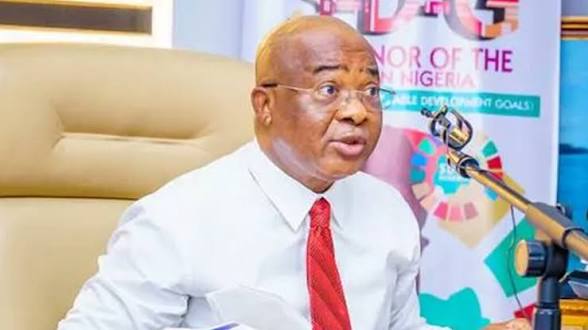
Imo Lawyers for the Defence of Democracy have called on the Minister of the Federal Capital Territory, Nyesom Wike, to stop what it termed public attacks on Imo State Governor, Senator Hope Uzodinma, saying political disagreements should be resolved through democratic dialogue and constitutional means.The group made the call in a statement signed by its Secretary, Ifeoma Chukwunyere on Friday, September 18, 2026, amid what it described as increasingly personal exchanges between Wike and Uzodinma over political developments within the All Progressives Congress.The lawyers said the APC Governors’ Forum had rejected what they described as Wike’s “Rainbow Coalition” political arrangement, arguing that the disagreement should be addressed with the forum rather than through personal attacks on Uzodinma.According to the group, the forum’s position was based on concerns that the political arrangement could weaken the APC or create divided loyalty within the party.“We recognise the constitutional right of every Nigerian, including public officials and political actors, to express political opinions, criticise policies and participate in political activities,” the group said.“However, that freedom must not become a licence for personal attacks, intimidation or unnecessary escalation.”The lawyers said Uzodinma, as the governor of Imo State, should be allowed to discharge his responsibilities without political exchanges creating tension capable of affecting the peace and stability of the state.They urged Wike to desist from further public comments concerning the governor, insisting that political disagreements should focus on policies, programmes, political positions and verifiable facts rather than personal exchanges.The group also warned political actors against turning Imo State into a battleground for political supremacy.“Imo State is not a battlefield for political supremacy. Its people have the constitutional right to choose their leaders and determine their political future without undue interference, intimidation or external pressure,” it said.The lawyers further called on political parties, leaders, supporters and media platforms to avoid inflammatory language that could provoke confrontation.They urged Uzodinma to continue to operate within the Constitution and the laws of the country, while allowing relevant political and legal institutions to handle legitimate disagreements.The group also appealed to President Bola Tinubu to encourage restraint among political actors, particularly in relation to the dispute between Wike and Uzodinma.Addressing Wike directly, the lawyers said: “Mr. Minister, Imo State belongs to its people. You are not from Imo, so stay off Imo.”They stressed that disagreements over political strategies, elections, alliances and political actors in the state should be settled through democratic debate and constitutional processes.The group said it would continue to monitor developments affecting constitutional governance, democratic participation, political freedom and peace in Imo State.“Our position is simple: Democracy must prevail. The Constitution must prevail. The rule of law must prevail,” the statement added.
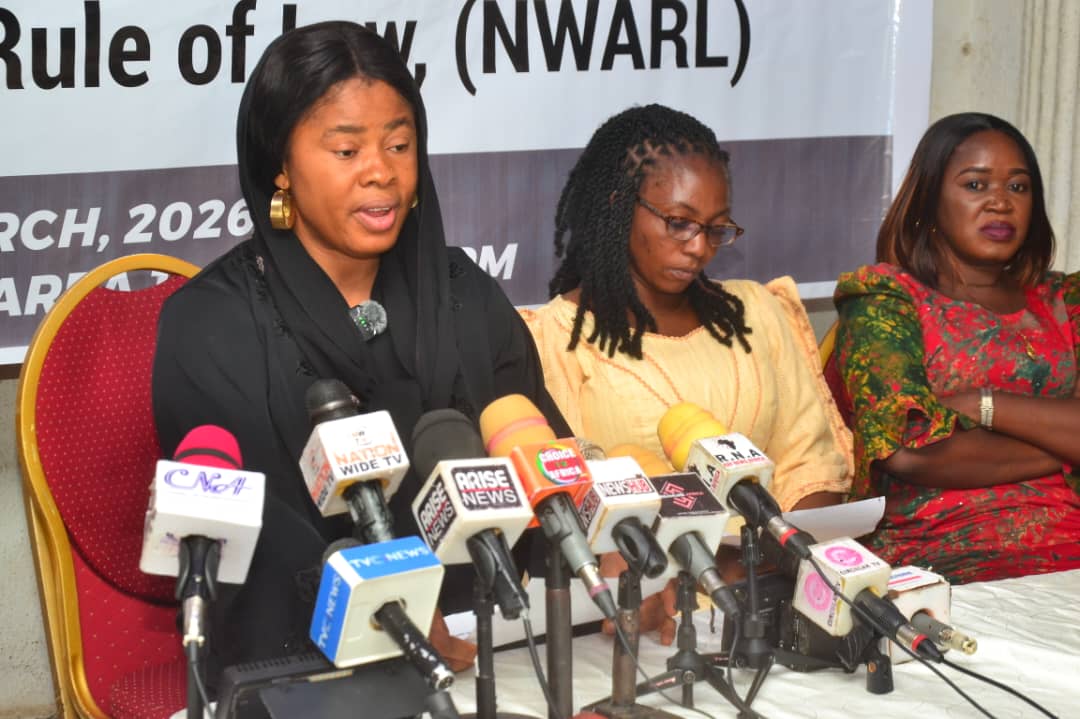
Four women-led advocacy groups have called for strict adherence to the rule of law in addressing the allegations circulating against the Minister of Works, David Nweze Umahi, insisting that the matter should be resolved through proper judicial channels rather than through social media campaigns.
At a press briefing in Abuja on Sunday, 1st March, 2026, the organisations, Women Advocates for Responsible Governance, WARG, Women for Justice and Institutional Integrity, WJII, Coalition of Patriotic Nigerian Women, CPNW, and National Women Alliance for Rule of Law, NWARL, collectively maintained that the accusations attributed to Mrs Tracy Nicholas Ohiri lack verifiable documentation and must be tested before a competent court.
Addressing journalists, the National President of WARG, Dr. Amina Yusuf, was reported to have expressed concern that unsubstantiated claims were being amplified in a manner capable of undermining governance. She reportedly stated that the issue was not about silencing any individual but about ensuring that serious allegations are backed by credible evidence. According to her, a ₦24.5 million transaction allegedly dating back to 2015 would ordinarily be supported by contracts, invoices, delivery acknowledgements, and traceable financial records.
She was quoted as questioning why, nearly a decade later, there appears to be no formal demand letter, civil action, or documented effort at recovery if the claim was genuine, stressing that public discourse must not replace legal procedure.
Similarly, the Executive Director of WJII, Hajia Halimat Bello, was said to have emphasized that institutional integrity depends on proof and process. She reportedly argued that commercial transactions of such magnitude cannot exist without documentation and challenged the claimant to present procurement records or evidence of civil recovery steps if the supply truly occurred.
The groups further cautioned against emotional narratives overshadowing legal standards, warning that sensational approaches risk eroding public trust in legitimate complaints.
Speaking for the CPNW, Mrs. Folake Adeyemi reportedly described the allegation as inconsistent with established commercial practice, noting that it would be unusual for a multi-million naira supply to remain undocumented and unlitigated for nearly ten years. She was said to have added that if the matter were purely about debt recovery, the appropriate legal remedies would have been pursued long ago.
On her part, Dr. Grace Onuoha, representing NWARL, reportedly drew attention to the broader democratic implications, stating that accountability must operate within the confines of lawful procedure. She was quoted as urging parties to file claims, present evidence, and allow the courts to determine the facts, warning against what she described as verdicts delivered in the court of public opinion.
Collectively, the four organisations reiterated that their stance was guided by principle rather than personality. They affirmed the presumption of innocence and underscored the need for due process in matters involving public officials.
They called on Nigerians to refrain from what they termed trial by ambush and to allow competent judicial institutions to examine the claims thoroughly.
The groups maintained that allegations, however serious, must ultimately be proven in court, not adjudicated through viral content.

Civil society organisations, media professionals, and leaders of the APC on Friday called for urgent constitutional intervention in the escalating political crisis in Rivers State, demanding that the National Assembly take over the legislative functions of the Rivers State House of Assembly in line with Section 11 of the Constitution.
Addressing journalists during a one week non stop rally at the APC Secretariat on 23rd January 2026, the groups declared that the Rivers State House of Assembly had lost credibility, legitimacy, and public trust due to what they described as persistent abuse of legislative powers and a reckless attempt to impeach Governor Siminalayi Fubara.
They warned that Rivers State was sliding into a dangerous constitutional crisis, stressing that the ongoing impeachment process was no longer about legislative oversight but a deliberate effort to destabilise democratic governance. According to them, democracy in the state was under serious threat and silence at this point would amount to complicity.
The groups commended the Rivers State Chief Judge for refusing to constitute a probe panel and for respecting existing court orders, describing the decision as a clear affirmation of the rule of law and a rejection of illegality. They insisted that no evidence of gross misconduct, as required by the Constitution, had been presented against Governor Fubara, adding that the allegations were unsubstantiated and politically motivated.
They further accused the Rivers State House of Assembly of procedural lawlessness, vendetta politics, and disregard for judicial authority, arguing that such conduct rendered the Assembly incapable of performing its constitutional duties. On this basis, they urged the National Assembly to invoke Section 11 subsection 4 of the Constitution of the Federal Republic of Nigeria and assume the legislative functions of the state assembly to restore order and democratic stability.
The APC Leaders Forum and civil society groups also alleged that 27 lawmakers loyal to former Governor Nyesom Wike, led by Martins Amaewhule, were behind the crisis. They claimed the lawmakers had received constituency project funds estimated at about ₦350 million each, luxury SUV vehicles, and up to one year salary in advance, yet remained unsatisfied and determined to frustrate the current administration. According to the groups, the lawmakers were more interested in diverting state resources for personal benefit than allowing public funds to serve the people of Rivers State.
The coalition vowed to sustain the protests until decisive constitutional action was taken, including the takeover of legislative functions by the National Assembly. They called on Nigerians of goodwill to peacefully mobilise, maintain civic presence around the National Assembly, and resist what they described as legislative anarchy.
They maintained that Governor Fubara had shown prudence and commitment to the welfare of Rivers people, warning that Rivers State must not be sacrificed on the altar of political desperation.
The groups concluded with a call for unity in defence of democracy, declaring their resolve to continue the struggle until constitutional order is fully restored in Rivers State.


2027: Ignore Wike’s Ranting, Lawyers tell Uzodinma